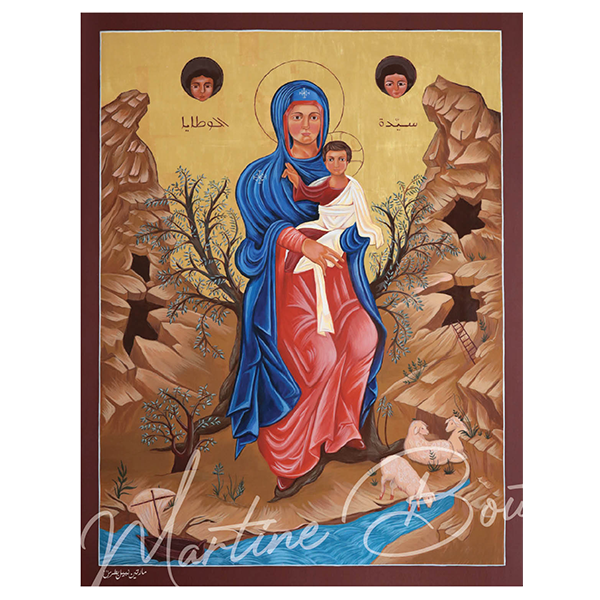
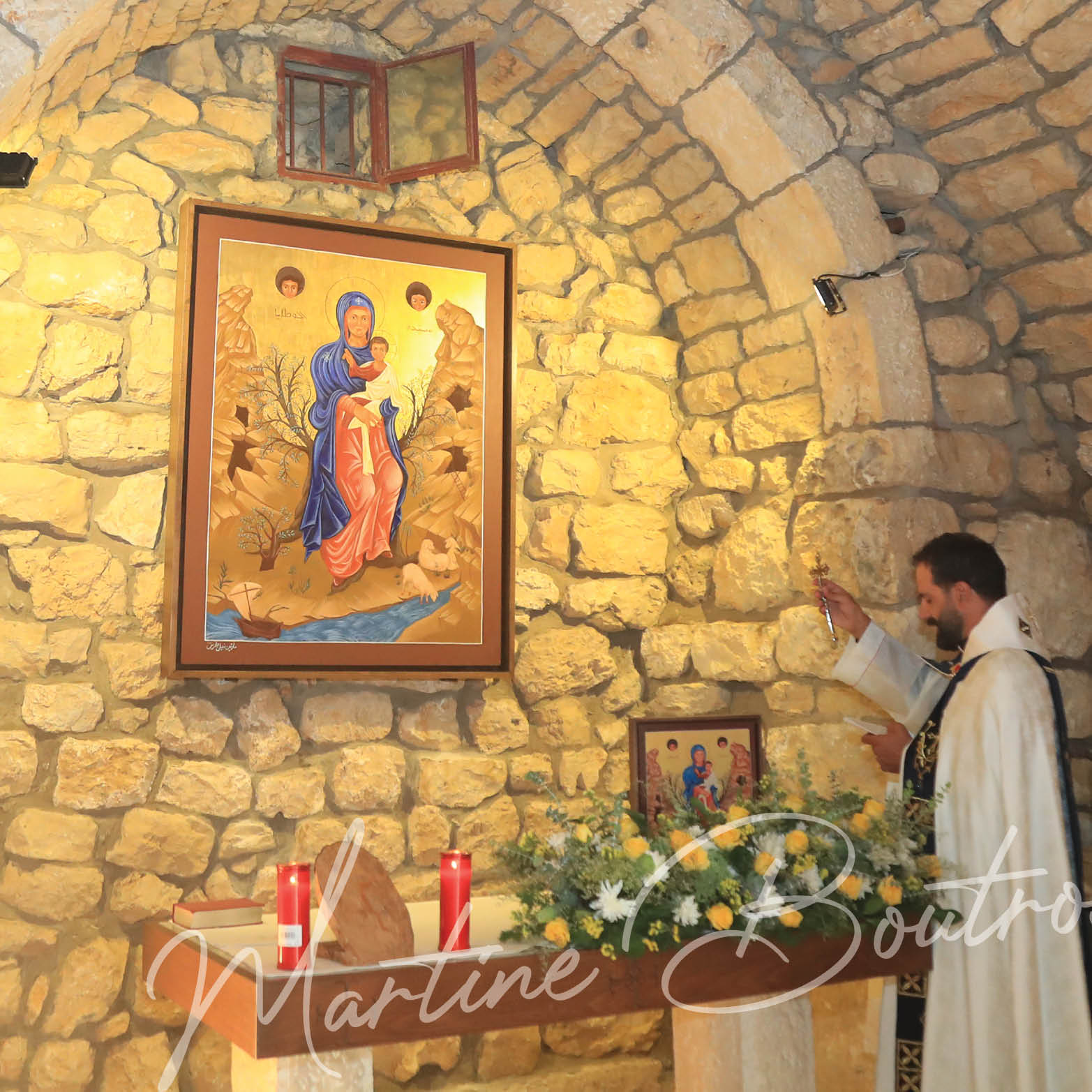
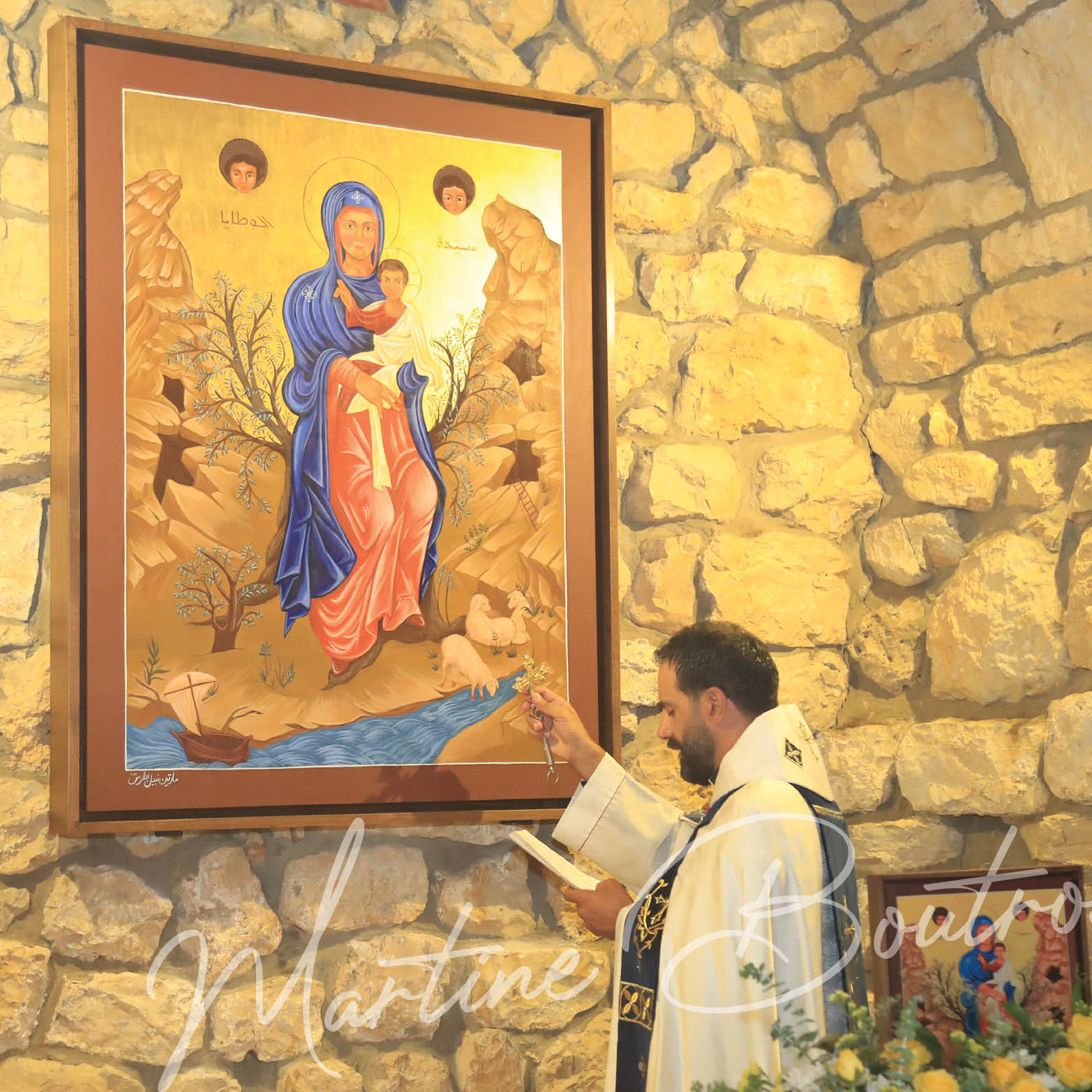
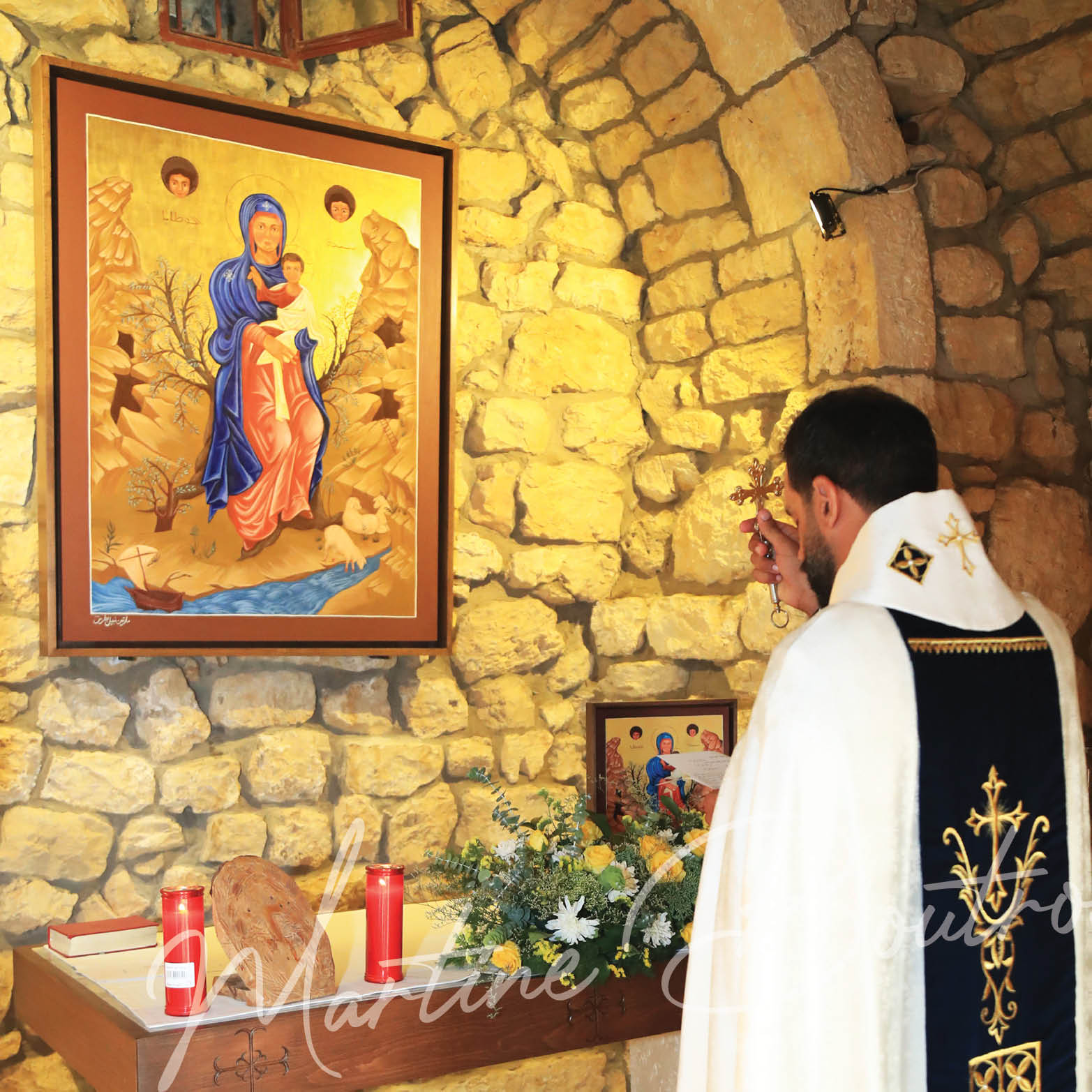
Saydet Al Wataya Icon
0 $
 From Martine Icons Atelier… to You
0 $
The Virgin Mary, Mother of God and Lady of the Valleys, Makes the Wadi Obeidat a Throne for Her Motherhood
Explanation of the Icon and its Meanings with Father Nicolas Akiki, OLM
The details of the Virgin’s depiction are inspired by the 10th-century icon of Our Lady of Ilije:
The celestial blue mantle worn by the Virgin Mary, Mother of God, is a sign of her heavenly motherhood. The red garment she wears beneath the mantle symbolizes the human nature that Jesus took from His virgin mother, Mary. The white garment Jesus wears symbolizes light and purity, and His white sash, raised slightly on His chest, symbolizes kingship and sovereignty, as was customary at the time. The brown garment also worn by Jesus, a color close to that of the earth, signifies that He took His human nature from His mother Mary, as the Maronite liturgy says: “He trod the winepress… so His garments were stained…”
We see the Child Jesus on His mother Mary’s left arm, as the Maronite liturgy says: “And her head is supported by the right hand of the Son, the living, giving Lord.”
The movement of the Virgin Mary’s right hand indicates her role towards humanity; she is known as the Hodigitria, the “One Who Shows the Way,” pointing to her Son, Jesus. Her left hand is not visible in the icon, just as her Son’s left hand is not. The movement of Jesus’s right hand is a symbol of giving a blessing, for in Him, the divine and human natures were united, as the shape of His hand symbolizes.
The folds of the veil on the Virgin’s head remind us of the miniatures in the Rabula Gospels (6th century), Bishop of Edessa, as we see the same folds and the color red under the blue, meaning that humanity was adorned with divinity. We also notice that her figure is slender and tall, which comes from Hellenistic art.
The Virgin’s eyes are open, a sign of entering the world of God, the world of glory, because the person in the icon is called to have their eyes always open to behold the glory of God.
The background of the icon is golden, symbolizing the Kingdom, because the incarnate God, who became a child, made Mary’s womb “more spacious than the heavens,” as the Byzantine liturgy says. With the stars painted on her shoulders and head, the icon confirms her virginity “before, during, and after childbirth,” as the Maronite liturgy states.
The Virgin Mary has transcended time, for she is the mother of Jesus, God and Man, the Lord of time. This is expressed by the two faces at the top of the icon, which are symbols of the sun and the moon, the measures of time in which humans live, day and night.
The Virgin Mary is the Lady of the ascetics who inhabited the caves of the monasteries of Mar Semaan, Mart Moura, and Mar Antonios, living the mystery of redemption as a meeting between their daily mortifications in the caves and the death and burial of Christ in the tomb on one hand, and their continuous meeting with the Risen Christ, who gives life to those in the tombs, on the other.
Therefore, the shape of the mountain reminds us of the icon of the Harrowing of Hell. For we are children of Holy Saturday, children of hope that does not disappoint, no matter how high the mountains of difficulty, we remain children of the Resurrection and life.
And the river, a symbol of life flowing from the side of the Crucified One, flows deep into the Wadi Obeidat, to remain a sign of hope and life for all who walk “in the valley of the shadow of death,” and an oasis of salvific repentance for every sheep that has strayed from the flock of the Good Shepherd.
The olives of Obeidat, symbols of peace, fertility, and blessing, surround the Virgin, Lady of the Valleys, and her Son Jesus, carrying the longing of our people for peace and their need for the intercession of the Mother of God so that blessing may dwell in our villages and homes.
In the face of the Mother of God, there is beauty, tenderness, and compassion, waiting to welcome, accompany, and bid farewell to those returning. The eyes of the Child Jesus are like His mother’s; we see in them awareness and wisdom, gazing into the distance, seeing the cross of salvation and longing for redemption.
In the face of Our Lady of the Valleys and the face of her Son, the Lord of Gifts, we see the face of everyone who meditates on them—a face that bears the worries, difficulties, and sorrows of the days, and eyes fixed on the Redeemer of the universe, pleading for His salvation, glory, and resurrection.
مريم العذراء، والدة الإله وسيّدة الوطايا، تجعل من وادي عبيدات عرشًا لأمومتها.
شرح الأيقونة ومعانيها مع الأب نيقولا عقيقي ر.ل.م.
تفاصيل رسم العذراء، مستوحاة من إيقونة سيّدة إيليج التي تعود للقرن العاشر الميلادي:
الوشاح السماوي، ذات اللون الأزرق الذي ترتديه العذراء مريم أمّ الله، هو دليل على أمومتها السماويَّة. وأماّ الثوب الذي ترتديه، تحت الوشاح، ذات اللون الأحمر، فيرمز إلى الطبيعة البشريّة التي أخذها يسوع من أمهّ البتول مريم. وبالنسبة إلى الثوب الأبيض، الذي يرتديه يسوع، فيرمز إلى النّور والطهارة، وزنّاره الأبيض المرفوع قليلاً على الصدر يرمز إلى الملكيّة وإلَّى السيادة، كما كانت الاعتبارات في حينها. والثوب البنيّ اللون الذي يرتديه يسوع أيضًا، هو قريب من اللون الترابي، الذي يدل على أنه اتخذ طبيعته البشريَّة من أمّه مريم، كما تقول الليتورجيا المارونيّة: “كدائس داس المعصرة… هكذا اصطبغت ثيابه…”
نرى يسوع الطفل على ذراع أمّه مريم اليسرى، كما تقول الليتورجيا المارونيّة: “ورأسها تدعم يُمنى الابن الربّ الحيّ الوهّاب”.
تدُّل حركة يد العذراء مريم اليُمنى على دورها تجاه البشريّة، وتُعرف بالهادية، Hodigitria
التي تدلّ على ابنها يسوع. أمّا يدها اليسرى فغير ظاهرة في الإيقونة، تمامًا كما يد ابنها يسوع اليسرى. وأمّا حركة يَدُ يسوع اليُمنى، فهي رمز لمنح البركة، ففيه اجتمعت الطبيعة الإلهيّة والطبيعة الإنسانيّة، كما يرمز شكل يده.
تقاطيع المنديل على رأس العذراء، يذكّرنا بمنمنمات إنجيل ربولا (القرن السادس)، أسقف الرّها، بحيث أنَّنا نرى التقاطيع نفسها واللون الأحمر تحت الأزرق، أي أن البشريّة اتّشحت بالألوهة. نلاحظ أيضًا أنّ القامة ممشوقة، طويلة، وهذا يعود إلى الفن الهلّيني.
عينا العذراء مفتوحتان علامة الدخول في عالم الله، عالم المجد، لأنّ إنسان الأيقونة مَدعوٌّ لتكون عيناه مفتوحتان أبدًا، لمشاهدة مجد الله.
خلفيّة الإيقونة ذهبيّة، ترمز للملكوت، لأنّ الإله المتجسّد، الذي صار طفلاً جعل رحم مريم “أرحب من السماوات” كما تقول الليتورجيا البيزنطيّة، وهي بالنجوم المرسومة على كتفيها ورأسها تؤكّد بتوليّتها “قبل الميلاد وفيه وبعده” كما تقول الليتورجيا المارونيّة.
لقد تخطّت مريم العذراء الزمن، فهي أمّ يسوع الإله والإنسان، سيّد الزمن. يعبّر عن ذلك الوجهان الموجودان في أعلى الإيقونة وهما رمز للشمس والقمر، مقياسي الزمن الذي يعيش فيه الإنسان، الليل والنهار.
مريم العذراء، هي سيّدة النسّاك، الذين استوطنوا مغاور دير مار سمعان ومورت مورا ومار أنطونيوس، فعاشوا سرّ الفداء كلقاءٍ بين إماتاتهم اليوميّة في المغاور وموت المسيح ودفنه في القبر من جهة، وبين لقائهم الدائم بالمسيح القائم من الموت، والواهب الحياة للذين في القبور، من جهة أخرى.
لذا يأتي شكل الجبل ليذكرنا بإيقونة النزول إلى الجحيم. لأننا أبناء سبت النور، أبناء الرجاء الذي لا يخيّب مهما علت جبال المصاعب، نبقى أبناء القيامة والحياة.
وهو النهر، رمز الحياة المتدفقة من جنب المصلوب، ينساب في عمق وادي عبيدات، ليبقى علامة رجاء وحياة لكل من يسير “في وادي ظلال الموت”. وواحة توبة خلاص لكلّ خروف بَعُد عن حظيرة الراعي الصالح.
زيتون بعبيدات، رمز السلام والخصب والبركة، يحيط بالعذراء، سيّدة الوطايا، وابنها يسوع، حاملاً توق أهالينا للسلام وحاجتهم لشفاعة والدة الإله لكي تسكن البركة قرانا ومنازلنا.
في وجه أمّ الله جمال ورقّة وحنان، تنتظر لتستقبل، وترافق العائدين مودّعةً. عينا الطفل يسوع كعيني أمّه، نرى فيهما وعيًا ورشدًا، تحدّقان إلى البعيد، تريان صليب الخلاص وتشتاقان إلى الفداء.
في وجه سيّدة الوطايا ووجه ابنها سيّد العطايا، نرى وجه كلّ من يتأمّل فيهما، وجه يحمل هموم الأيّام ومصاعبها وأحزانها، وعيون محدّقة بفادي الكون، تترجى خلاصة ومجده وقيامته.
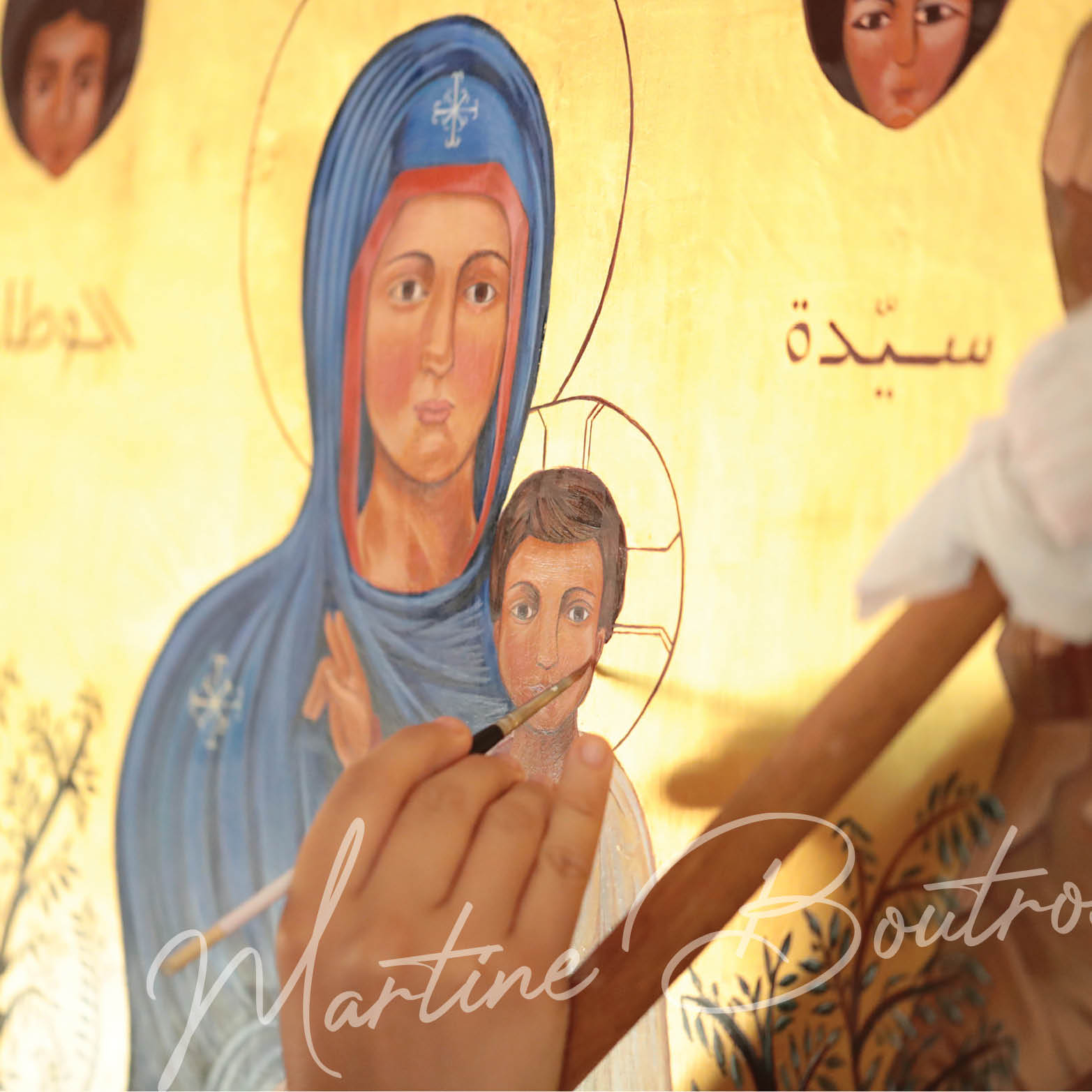
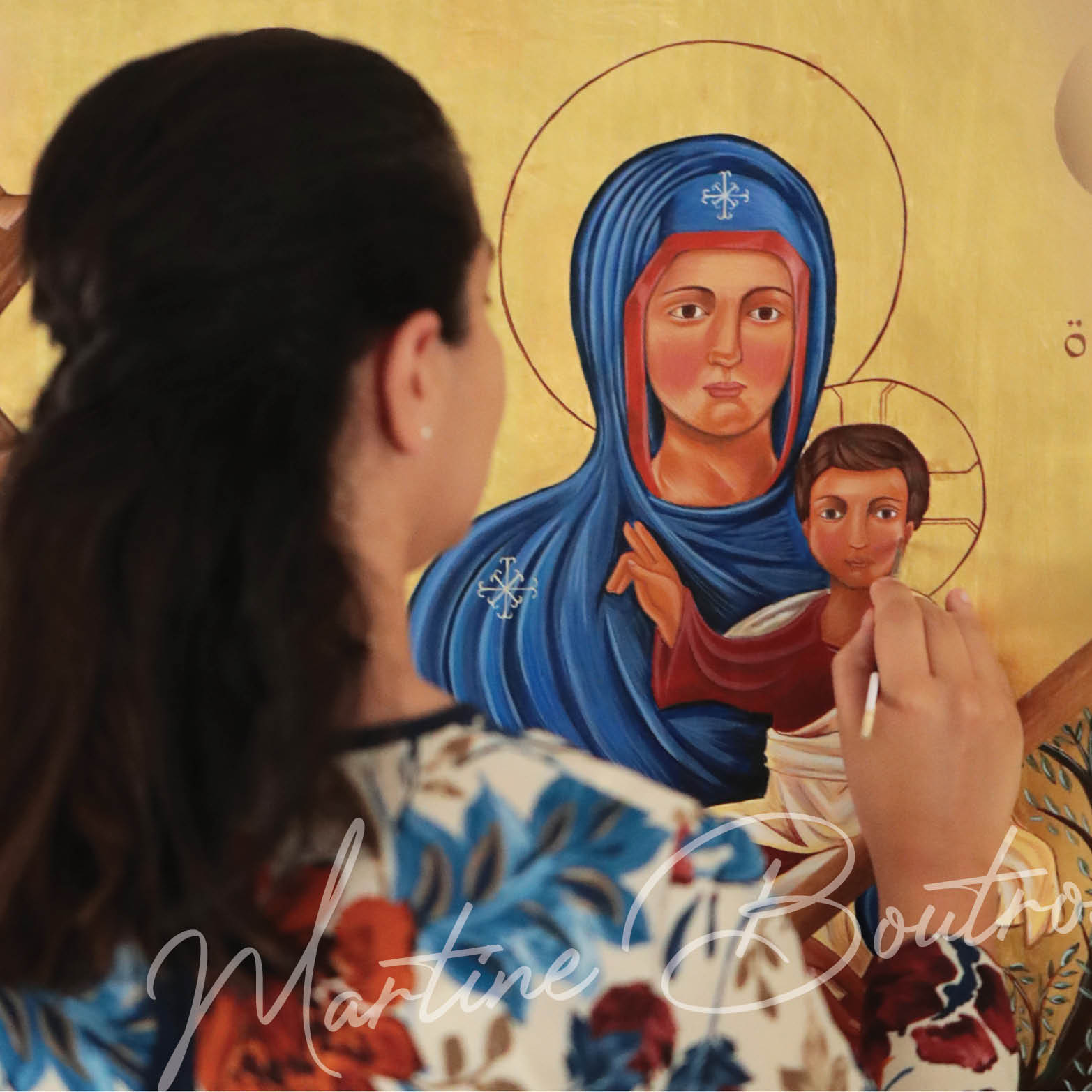
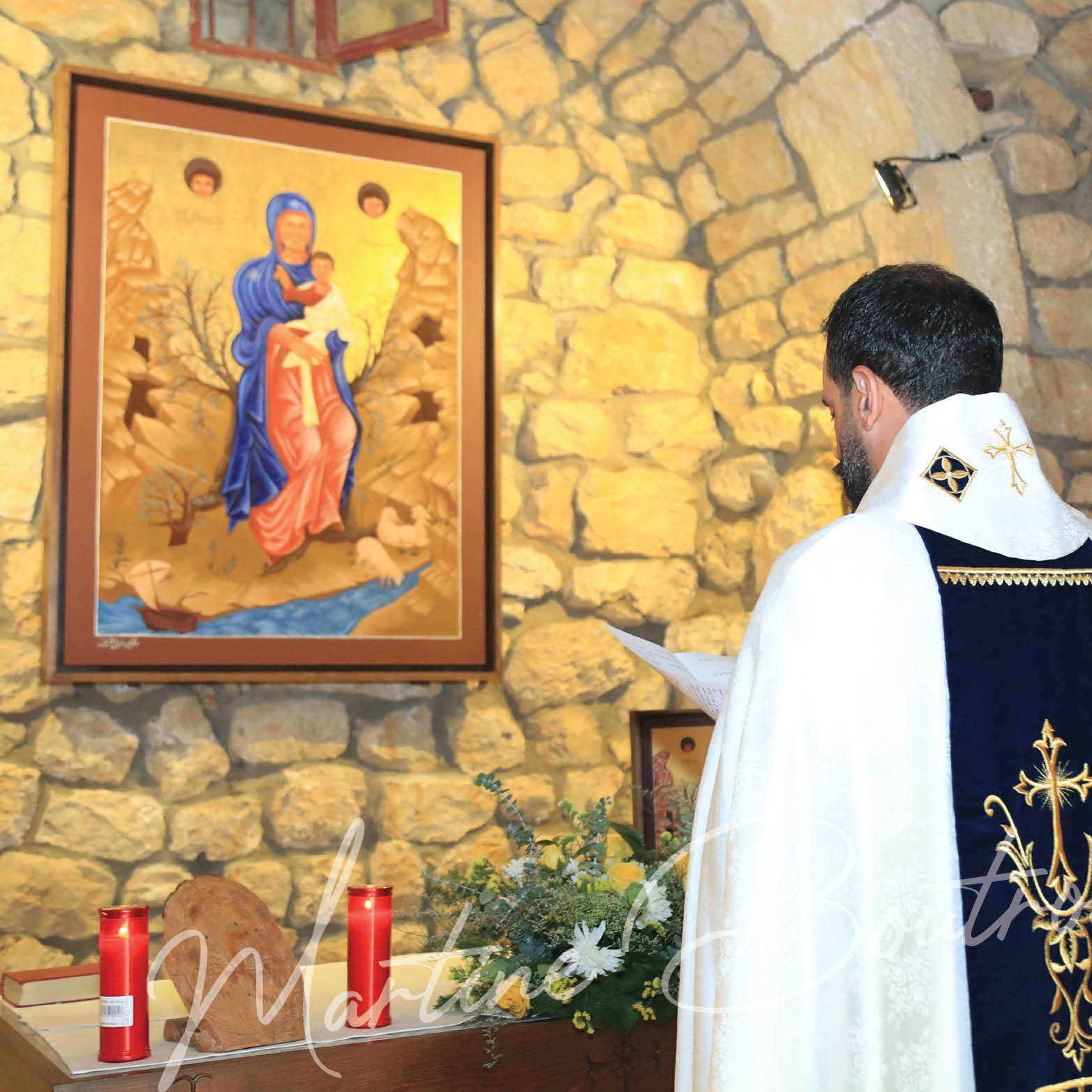
بمناسبة عيد انتقال العذراء مريم بالنفس والجسد إلى السماء، وفي غمرة الفرح بالاحتفال بهذا العيد، توضع ايقونة سيدة الوطايا، التي كتبتها ابنة عبيدات الآنسة مارتين بطرس، في كنيسة السيدة في عبيدات لتذكّرنا بالحقبة الغابرة التي سكن فيها نساكٌ مغاور دير مار سمعان ووادي عبيدات، وكانوا في سعيهم إلى الكمال وعيش سرّ الفداء يطلبون شفاعة مريم العذراء سيدة النسّاك.
للعذراء مريم دورٌ أساسيّ في حياة كنيستنا المارونيّة. لقد رافقت البطاركة أينما حلّوا، وكل الأديار البطريركيّة هي على اسم العذراء مريم، لأنهم رأوا فيها دائمًا الأم التي تسهر على الكنيسة وأبنائها وبناتها وتحميهم من كل الأخطار، والأم التي تتشفّع لهم لدى ابنها يسوع.
فكم نحتاج اليوم إلى طلب شفاعة العذراء في الظروف الخانقة والمظلمة التي يمر بها وطننا وشعبه، وكم نحتاج إلى هذه الأم التي تشدّدنا في المصاعب والتجارب وتوجّه أنظارنا نحو ابنها يسوع لنعمل بما يقوله لنا، وكم نحتاج إلى الرجاء التي تُعطينا إياه العذراء بمثلها وبقداستها لأنها تزرع فينا حُبّ القداسة والشوق إلى لقاء الحبيب والتوق إلى ربح الملكوت السماويّ.
فليكن هذا العيد مباركًا على الجميع وكل عيد وأنتم ووطننا بخير.
This is a detailed description of the product, including its features, materials, and any other relevant information.
We offer free shipping on all orders over $100. For orders under $100, a flat rate shipping fee of $10 applies. All items are shipped within 3-5 business days. If you are not satisfied with your purchase, you can return it within 30 days for a full refund.
Reviews
There are no reviews yet.