 From Martine Icons Atelier… to You
The Blessing of Our Lady of Wataya: A New Icon for Aabeidat
19/08/2021
Lebanese Artist & Iconographer
Martine Icons | Vibrand Studio
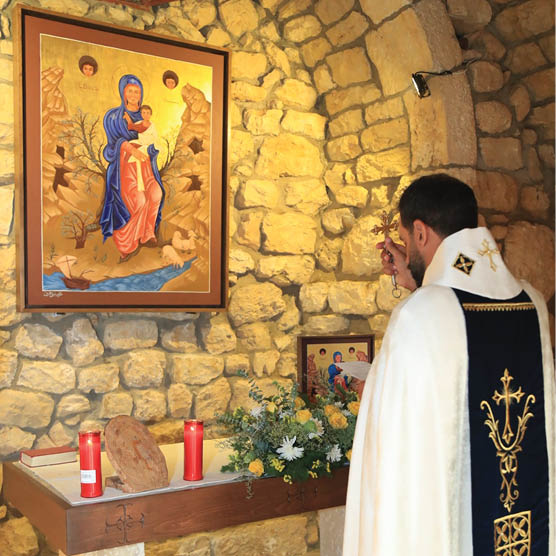
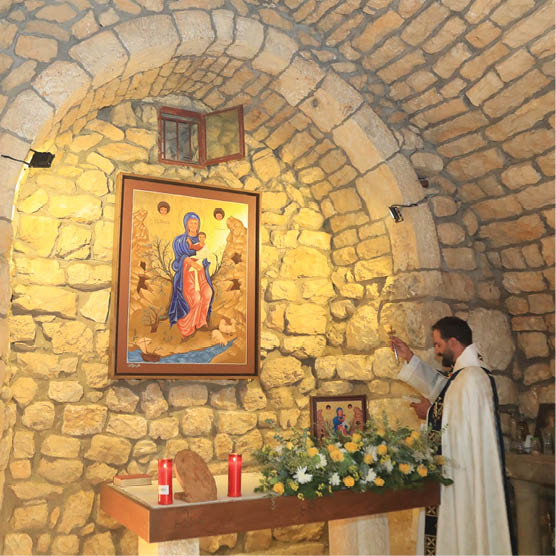
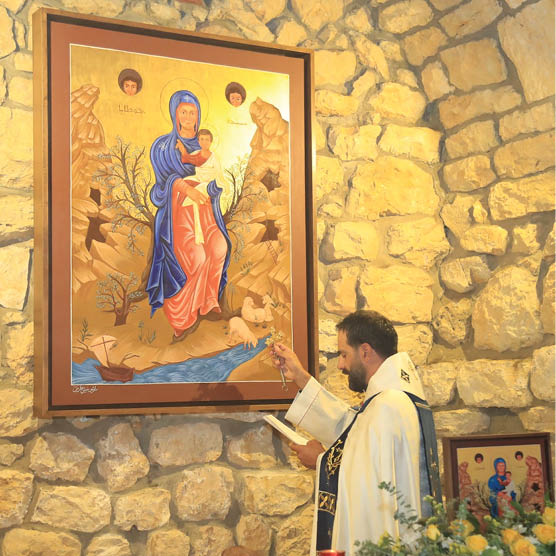
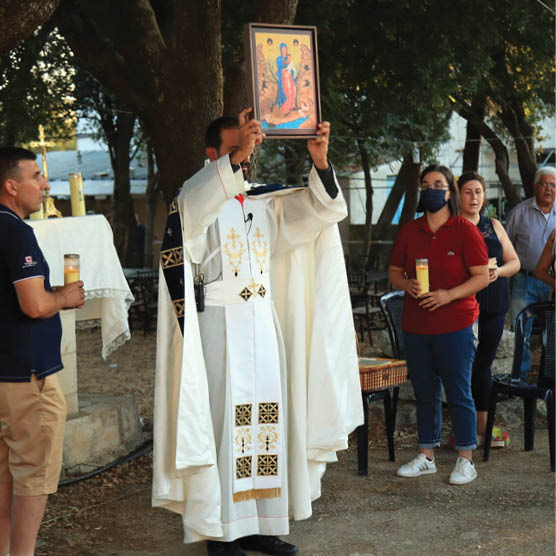
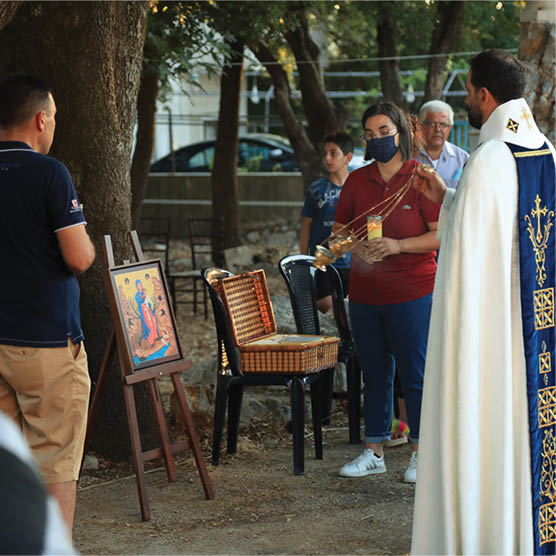
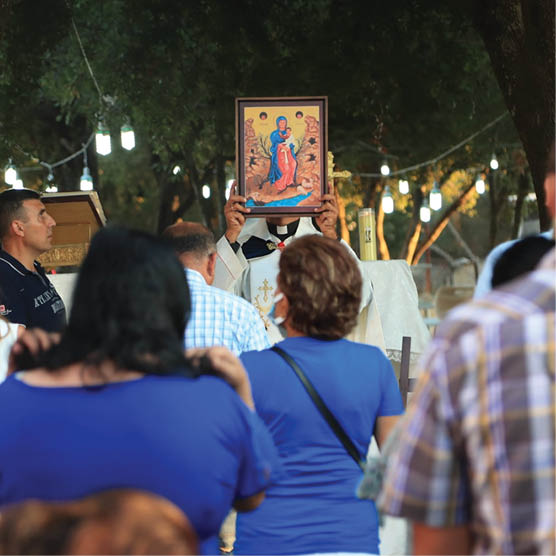
On August 14, 2021, on the Feast of the Assumption of the Virgin Mary, the parish of Mar Ousanious Aabeidat, led by Father Elie Lahoud, celebrated the blessing and installation of the “Our Lady of Wataya” icon. Painted by local artist Martine Nabil Boutros, this icon is a powerful reminder of the village’s spiritual heritage, commemorating the ascetics who once inhabited the caves of Mar Semaan, Mart Moura, Mar Antonios the Great, and the Aabeidat Valley. In their pursuit of redemption, these ascetics consistently sought the intercession of Mary, Our Lady of the Ascetics.
Mary’s Enduring Role in the Maronite Tradition
The Virgin Mary holds a central role in the Maronite Church. She has accompanied patriarchs throughout history, and all patriarchal monasteries are dedicated to her name. She is seen as the mother who watches over the Church and its children, protecting them and interceding with her son, Jesus.
In the challenging circumstances facing Lebanon, there’s a profound need to seek Mary’s intercession. We need this mother to strengthen us in trials, guiding our eyes toward her son, Jesus. Mary provides hope through her example and sanctity, inspiring a love for holiness and a longing for the heavenly kingdom.
The Icon’s Rich Symbolism
Father Nicolas Akiki (O.L.M.) explained the icon’s spiritual and artistic meaning. The depiction of the Virgin is inspired by the 10th-century icon of Our Lady of Ilije.
- Colors and Garments: Mary’s blue celestial veil symbolizes her heavenly motherhood, while her red dress represents the human nature Jesus took from her. Jesus’s white tunic signifies light and purity, and his raised belt symbolizes kingship. His brown tunic, the color of earth, signifies that He took His human nature from Mary.
- Gestures: The infant Jesus rests on Mary’s left arm. Her right hand, known as the Hodigitria (the Guide), points toward her son, while Jesus’s right hand offers a blessing, symbolizing the unity of His divine and human natures.
- Artistic Details: The folds of Mary’s veil recall the 6th-century Rabbula Gospels. Her slender posture reflects Hellenic art, and her open eyes represent entering God’s glorious world. The golden background symbolizes the heavenly kingdom. Stars on her shoulders and head affirm her perpetual virginity. The sun and moon at the top signify Mary’s transcendence of time.
Aabeidat Valley: A Landscape of Faith and Hope
This icon beautifully links Mary, Our Lady of the Ascetics, with the landscape of the Aabeidat Valley. The mountain in the icon reminds us of the “Harrowing of Hell,” symbolizing our identity as children of Holy Saturday and our unyielding hope. The river, a symbol of life from the crucified Christ, winds through the valley, offering hope to all who walk “in the valley of the shadow of death.” Aabeidat’s olive trees surrounding Mary and Jesus are a powerful symbol of peace, fertility, and blessing, reflecting the community’s longing for peace.
In the face of the Mother of God, there is beauty, tenderness, and compassion; she waits to welcome and accompanies the returning souls as they depart. The eyes of the Child Jesus are like His mother’s, full of awareness and wisdom, gazing into the distance. They see the cross of salvation and yearn for redemption.
In the faces of Our Lady of Wataya and her son, the Lord of Gifts, we see the face of everyone who contemplates them—a face that bears the worries, hardships, and sorrows of the day, with eyes fixed on the Redeemer of the universe, longing for His salvation, glory, and resurrection..
Order Now
Order your own masterpiece or a high-quality replica of this icon today :
https://martineicons.com/product/saydet-al-wataya-icon/