Washing Of The Feet Icon
0 $
 From Martine Icons Atelier… to You
0 $
“Jesus Washing the Feet of Simon Peter”
with Rev. Fr. Nicolas Akiki O.M.L.
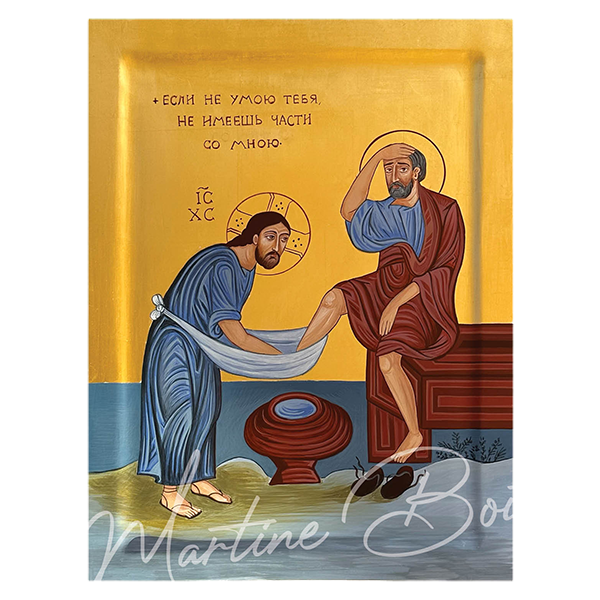
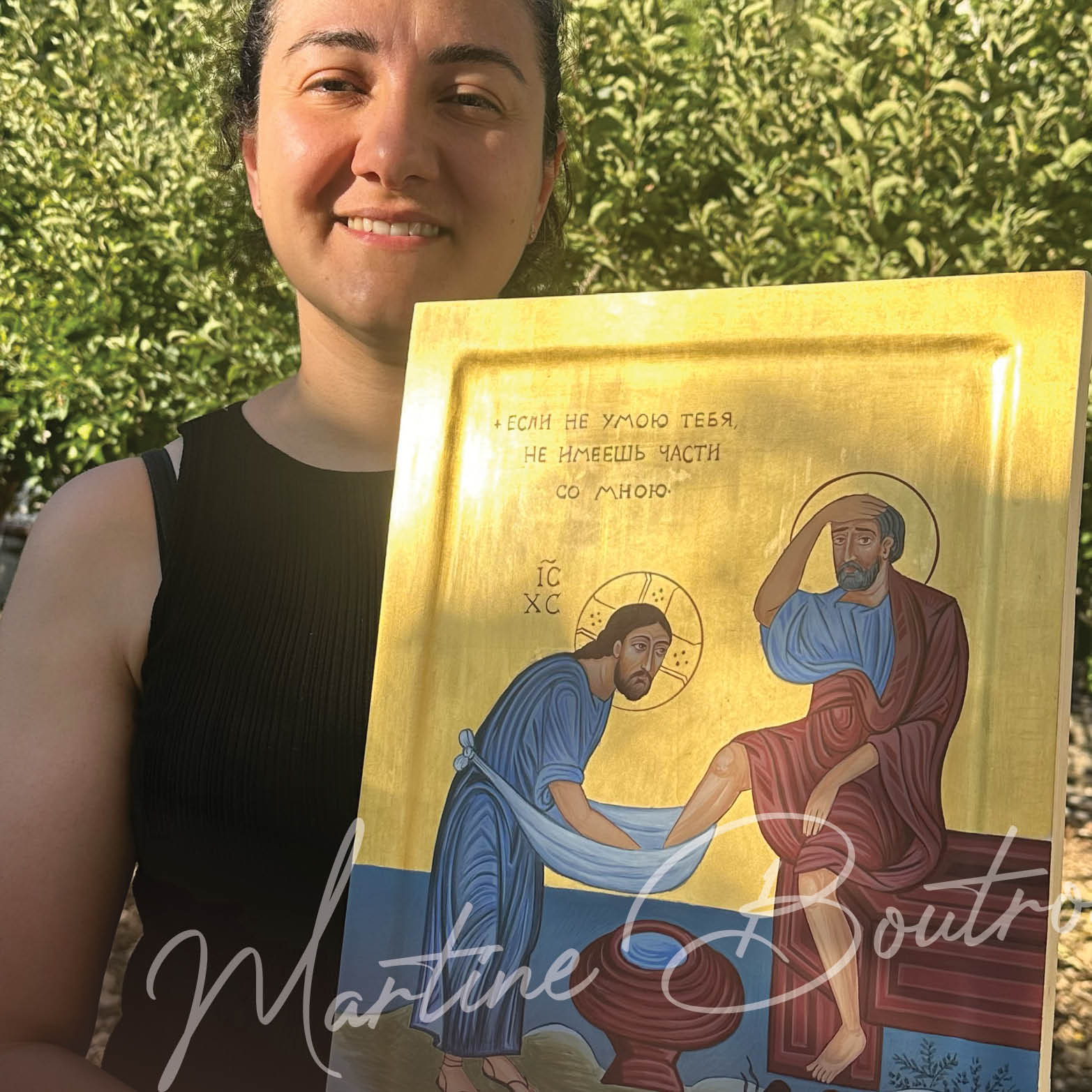
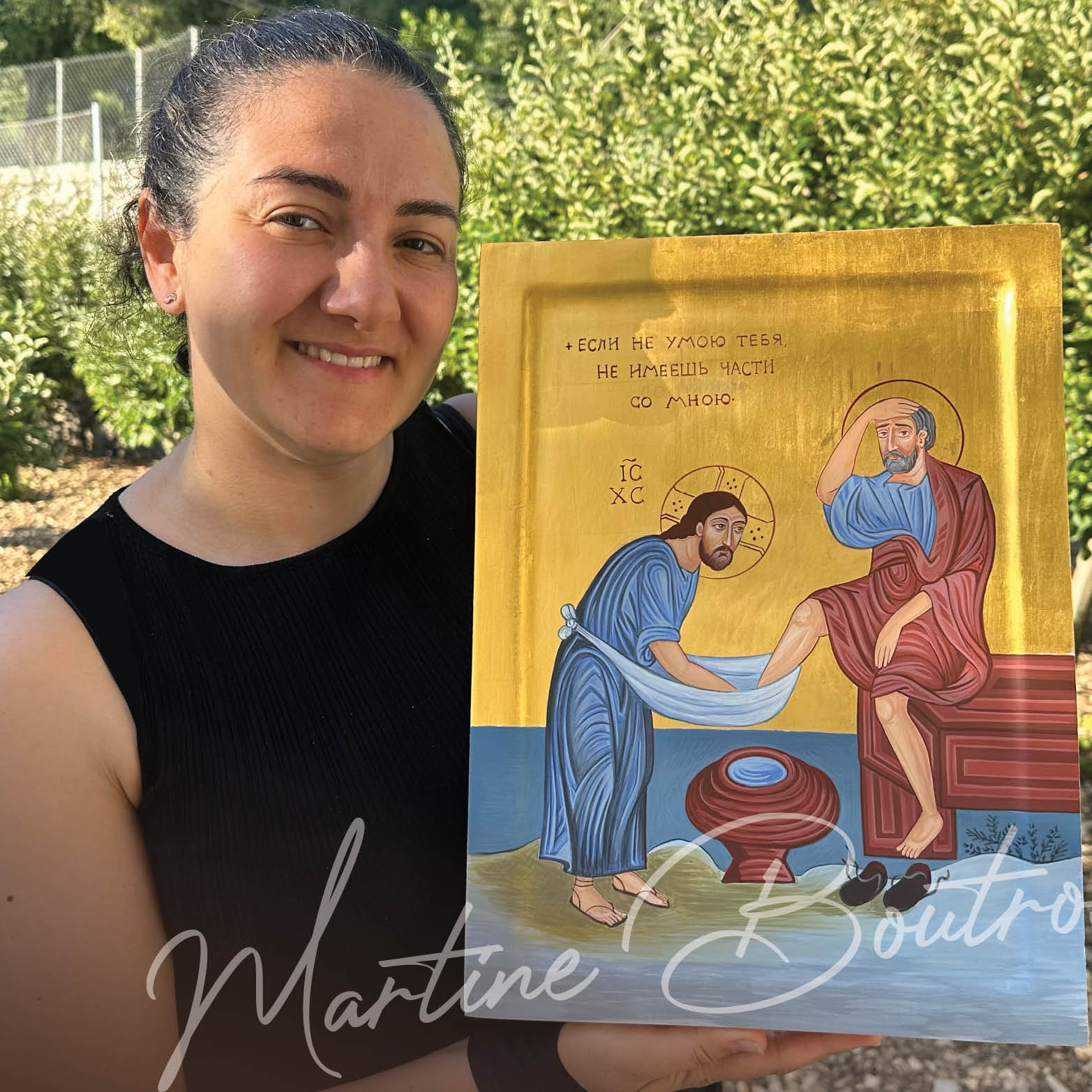
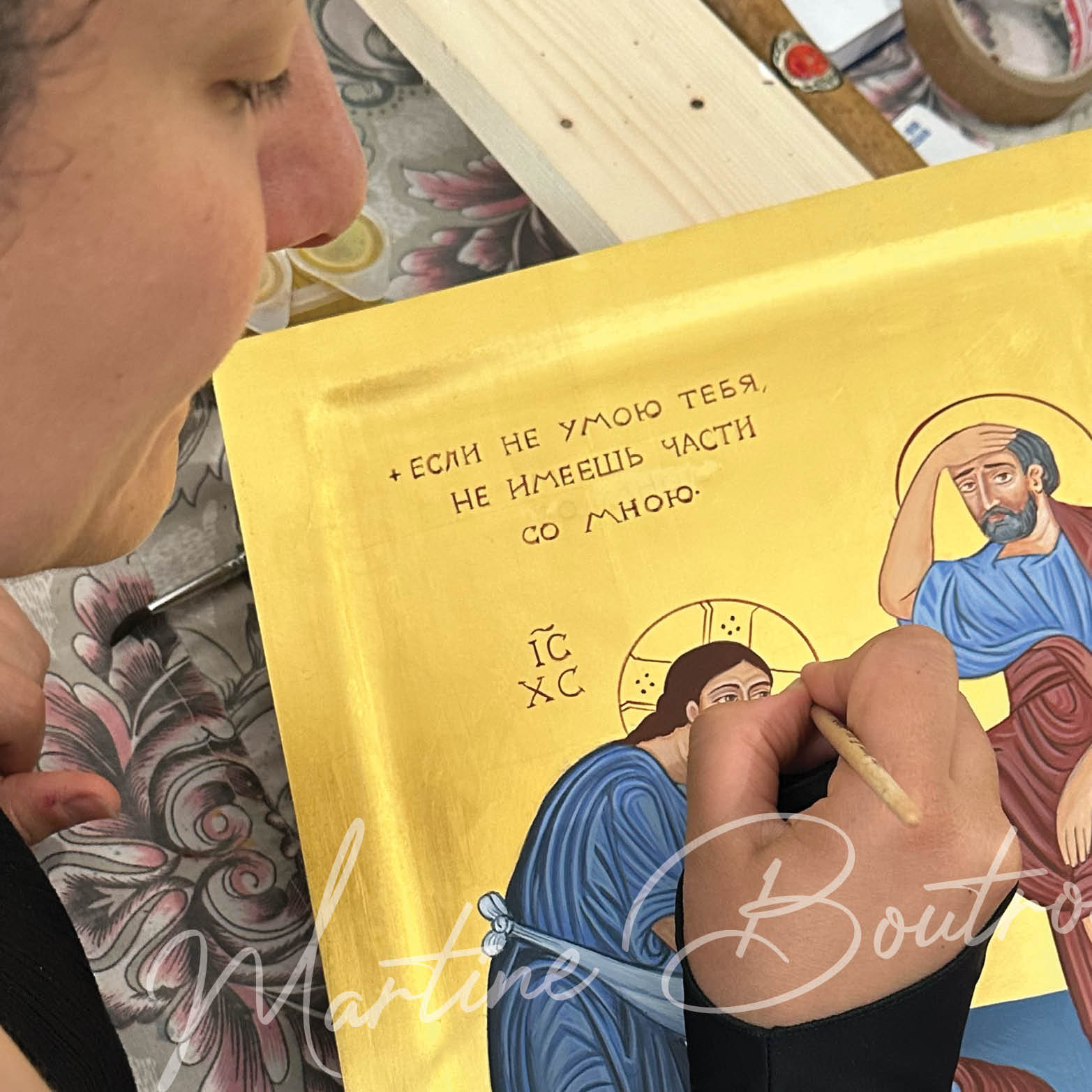
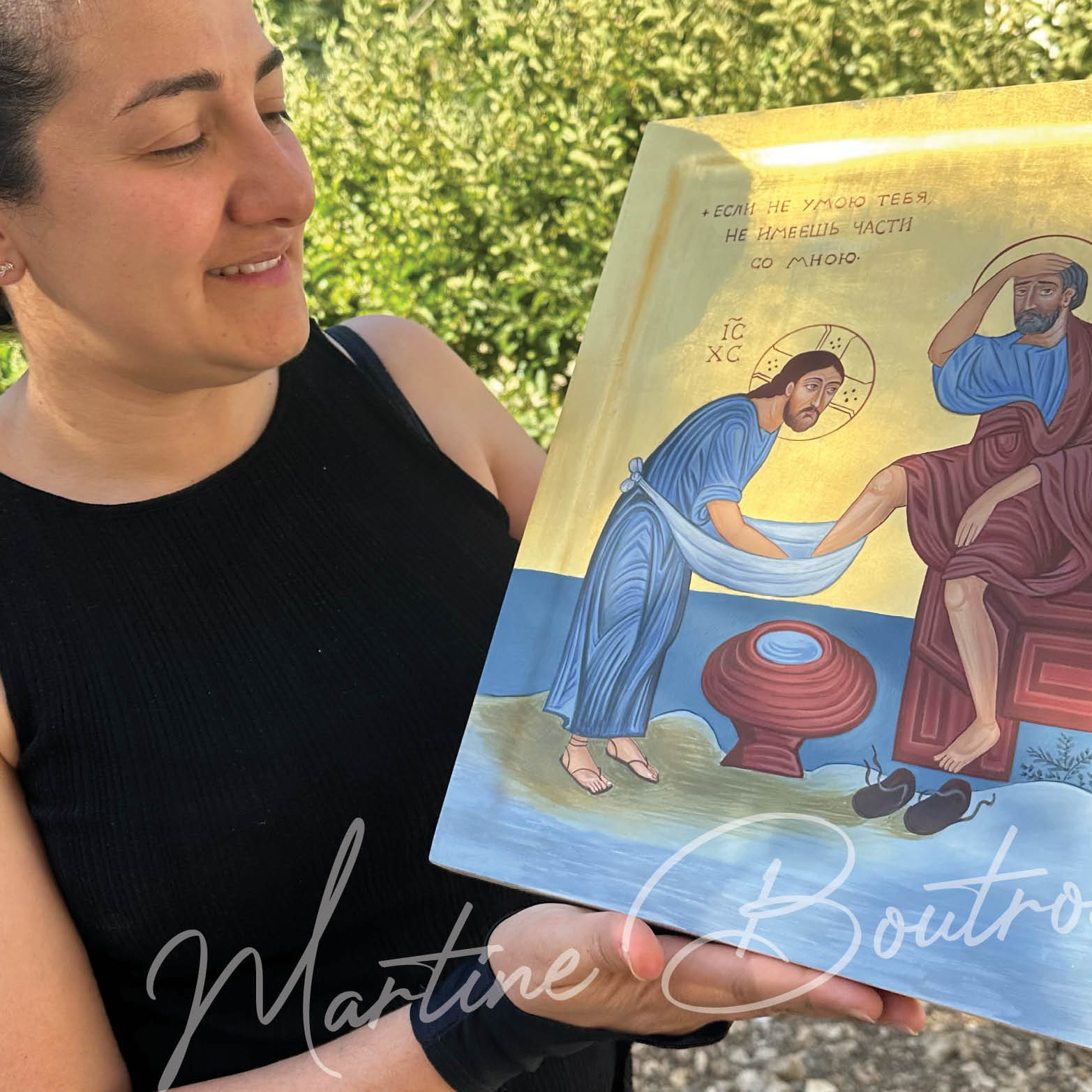
This is the subject of the icon that embodies a biblical event which occurred before Jesus’ Last Supper with His disciples, and it carries within it many meanings for the life of the Church. This icon depicts Jesus bending before the feet of Peter the Apostle, washing his right foot, while Peter is in a state of astonishment and bewilderment, raising his right hand, indicating his initial refusal of this act (John 13:4-10):
“He rose from supper, and laid aside His garments; and taking a towel, He girded Himself. Then He poured water into a basin, and began to wash the feet of the disciples, and to wipe them with the towel with which He was girded. He came therefore to Simon Peter. And Peter said to Him, ‘Lord, do You wash my feet?’ Jesus answered and said to him, ‘What I do you know not now, but you shall know hereafter.’ Peter said to Him, ‘You shall never wash my feet!’ Jesus answered him, ‘If I do not wash you, you have no part with Me.’ Simon Peter said to Him, ‘Lord, not my feet only, but also my hands and my head!’ Jesus said to him, ‘He who has bathed needs only to wash his feet, but is clean all over. And you are clean, but not all'”.
With these words, John the Evangelist revealed the profound meanings of service and divine humility. By this event, the Christian Pasch was inaugurated, where Jesus presents Himself as a servant, not as a master.
In this icon, Christ appears clothed in a blue garment (the heavenly color – signifying His divinity) , and it is one of the few icons in which Christ does not wear the dark red color (signifying His human nature and His sufferings).
For when He “laid aside His garments” (John 13:4), and washed the feet of His disciples, He thereby “emptied Himself, taking the form of a servant” (Philippians 2:7), humbling Himself to the lowest levels of humanity, to meet the feet of man, and to raise man to the level of divinity. With His calm facial expressions and humble gazes, He expresses that humanity which bows down, humbles itself, and diminishes itself to elevate man.
In the icon, Jesus places Peter’s foot in the fold of the towel to wipe it with His hands, as if that towel has become a new baptismal font. From the washing of feet, Jesus opens a door for the embarking on a new proclamation, to announce the Kingdom of God. From this washing/new Baptism, apostles are born who resemble the humility and service of their Teacher. From this spirituality, we exclaim with Paul the Apostle: “How beautiful are the feet of those who preach the good news of peace!” (Romans 10:15). Whoever sees the towel of service discerns the shadow of the shroud; for the washing of feet prepares the heart to receive a greater washing that will take place through the blood of the Cross.
As for the halo around Jesus’ head, it signifies holiness and His belonging to the heavenly realm. What distinguishes Jesus’ halo from the halo around Peter’s head is the cross drawn within it with the letters that abbreviate the name “Jesus Christ” in Greek (IC XC). This cross reminds us that divine glory is inseparable from the path of suffering.
In the icon, we find Peter seated on a wooden platform , signifying his position as the head of the Apostles, seated on the chair of the Church’s pastoral care. He is wearing a brown cloak , a symbol of his belonging to a land and the history of a people , but a part of a blue garment appears beneath that cloak , signifying that he, like every human being, is created in the image and likeness of God, and through His Incarnation, Jesus came to restore that image and return its original splendor. Peter raises his right hand to his head as a sign of astonishment or refusal , and appears uncomfortable, as if expressing the contradiction between the stance of refusal: “You shall never wash my feet!” (John 13:6) and the stance of acceptance: “Lord, not my feet only, but also my hands and my head!” (John 13:9). His foot is uncovered , to express his acceptance of the call to embark on a mission , awaiting the anointing of Christ upon his feet, which is a sign of sending forth.
The icon is centered by a basin filled with water , which gives meaning to the event of the washing of feet , for water is a symbol of purification and sanctification, and also of Baptism. As for the two sandals beneath Peter’s feet , they refer to Peter’s call to rise above the things that tie him to the earth, so that the washing of his feet becomes a path to a continuous state of embarking on the proclamation, and inner purification, that Christ may shine through him. This icon transports us from the geographical location where the washing took place (the Upper Room in Jerusalem) , to the shores of the Sea of Galilee, where Jesus called Simon to leave his nets and become a fisher of men (Matthew 4:19), and where He returned and met him after the Resurrection and renewed His call to him, asking three times: “Do you love Me?” (John 21:17). It is as if, through this change of scene, this icon presents the event of the washing as a form of Jesus’ repeated call to Peter.
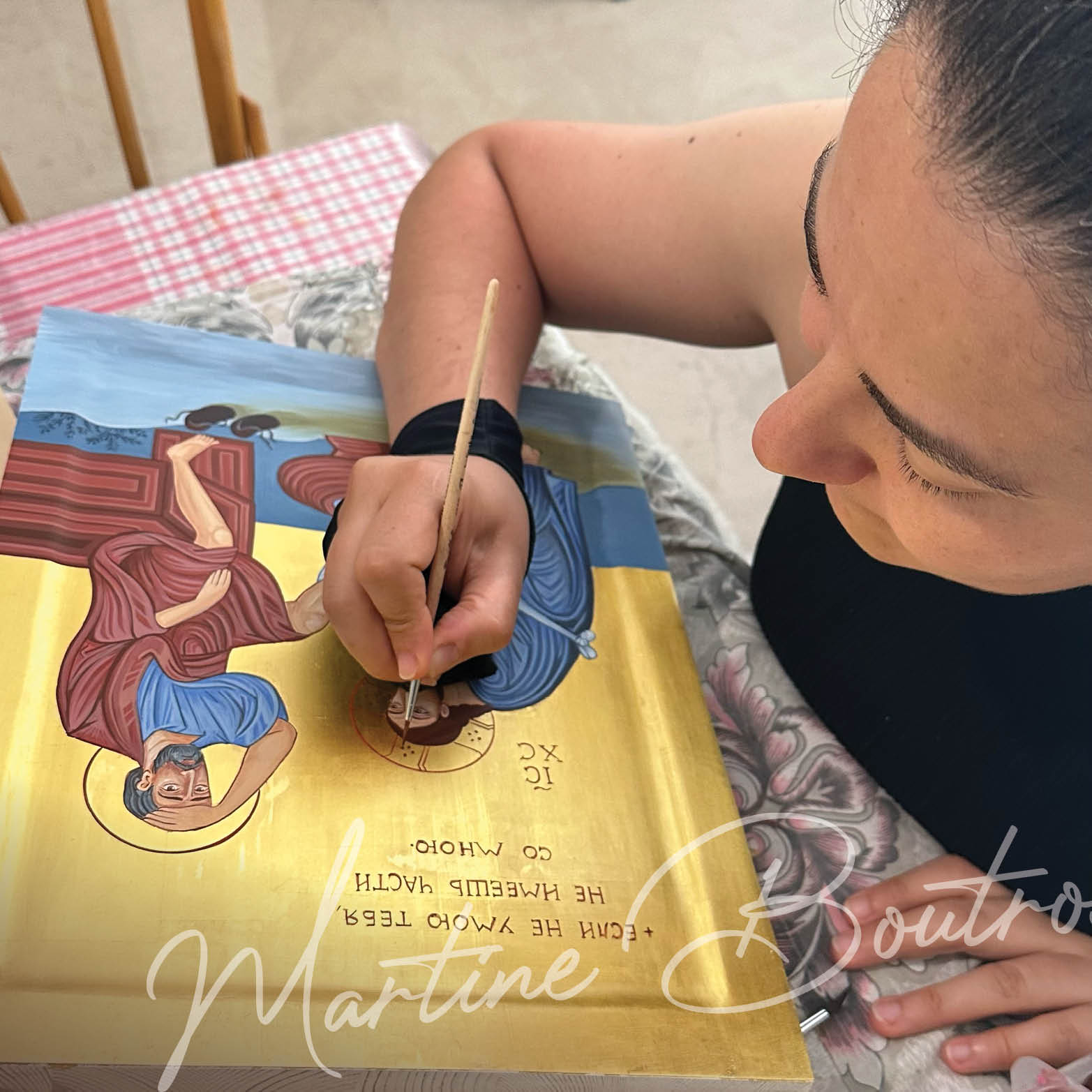
As for the golden background, it expresses glory , as if Jesus, by washing Peter’s feet, calls him to rise through the proclamation, from the sufferings of the earth to the glory of heaven , and thereby raises the Church and its children to be a heavenly Church on earth. On this golden background is a verse written in Old Church Slavonic: “+ Если не умою тебя, не имѣешь части со мною .,” which is quoted from John 13:8 , and its translation is: “If I do not wash you, you have no part with Me.” This phrase affirms that God does not impose communion by force, but leads us to it through an act of humble service. Jesus remains the primary initiator, while the acceptance of the initiative is subject to the disciple’s freedom.
O Lord, wash my feet, weary from the dust of my selfishness,
Cleanse my heart from the hardness of refusal,
Teach me to take off the sandals of pride,
And may I too bow down at the feet of my brethren,
To carry Your dignity to every human being,
That I may receive a part with You in the banquet that never fades. Amen.
“يسوع يغسل قدمَي سمعان بطرس”
مع الأب نيقولا عقيقي
” هذا هو موضوع الإيقونة التي تجسّد حدث بيبليّ، وقع قبل عشاء يسوع الأخير مع تلاميذه، وهو يحمل في طيّاته الكثير من المعاني لحياة الكنيسة. تجسّد هذه الإيقونة يسوع منحنيًا أمام قدمي بطرس الرسول، يغسل رجله اليمنى، فيما بطرس في حالة من الدهشة والذهول، رافعًا يده اليمنى مشيرًا إلى رفضه الأول لهذا الفعل (يو13: 4-10):
فقام عن العشاء فخلع ثيابه، وأخذ منديلاً فائتزر به، ثم صبّ ماء في مطهرة وأخذ يغسل أقدام التلاميذ، ويمسحها بالمنديل الذي ائتزر به. فجاء إلى سمعان بطرس فقال له: ” أأنت، يا رب، تغسل قدميّ؟”، أجابه يسوع: “ما أنا فاعل، أنت لا تعرفه الآن، ولكنك ستدركه بعد حين”. قال له بطرس: “لن تغسل قدميّ أبدًا”. أجابه يسوع: “إذا لم أغسلك فلا نصيب لك معي”. فقال له سمعان بطرس: “يا ربّ، لا قدميّ فقط، بل يديّ ورأسي أيضًا”. فقال له يسوع: “من استحمّ لا يحتاج إلاّ إلى غسل قدميه، فهو كلّه طاهر. أنتم أيضًا أطهار، ولكن لا كلكم”.
بهذه الكلمات، أظهر يوحنّا الإنجيليّ عمق معاني الخدمة والتواضع الإلهي، وبهذا الحدث افتتح الفصح المسيحيّ، حيث يقدّم يسوع نفسه كخادم لا كسيّد.
في هذه الإيقونة، يظهر المسيح مرتديًا ثوبًا أزرقًا (اللون السماوي – دلالة على ألوهيته) وهي من الإيقونات القليلة التي لا يرتدي فيها المسيح اللون الأحمر الداكن (دلالة على طبيعته البشرية وآلامه)، فهو إذ “خلع رداءه” (يو13: 4)، وغسل أرجل تلاميذه، فهو بذلك “واضع ذاته، آخذًا صورة عبد” (في 2:7)، أحنى ذاته إلى أدنى مستويات الإنسانيّة، ليلتقي مع أقدام الإنسان، ويرفع الإنسان إلى مستوى الألوهة. وبتعابير وجهه الهادئة، وبنظراته المتواضعة، يعبّر عن تلك الإنسانيّة التي تنحني وتتواضع وتنمحي لترفع الإنسان.
في الإيقونة، يضع يسوع قدم بطرس في باطن المئزرة ليمسحها بيديه، وكأنّ تلك المئزرة أصبحت جرن معموديّة جديد، من غسل الأرجل يفتح يسوع بابًا للانطلاق في البشارة الجديدة، لإعلان ملكوت الله. ومن هذا الغسل / المعموديّة الجديدة يولد رسل يتشبهون بتواضع وخدمة معلّمهم. ومن هذه الروحانيّة نهتف مع بولس الرسول: “ما أجمل أقدام المبشّرين بالسلام” (رو 10: 15). مَن يرى منشفة الخدمة يلمح ظلّ الكفن؛ فغسل الأرجل يهيِّئ القلب لقبول غسلٍ أعظم سيتمّ بدم الصليب.
أمّا الهالة حول رأس يسوع، فهي دلالة على القداسة، وانتمائه إلى عالم السماء، وما يميّز هالة يسوع عن الهالة حول رأس بطرس، هو الصليب المرسوم فيها مع الأحرف التي تختصر اسم “يسوع المسيح” باليونانيّة (IC XC). إنّ هذا الصليب يُذكِّرنا بأنّ المجد الإلهي لا ينفصل عن درب الآلام.
في الإيقونة، نجد بطرس وهو جالس على منصة خشبية، دلالة على كونه رأس الرسل، الجالس على كرسي رعاية الكنيسة. مرتديًا عباءة بنية، رمز انتمائه لأرضٍ وتاريخ شعبٍ، ولكن يظهر تحت تلك العباءة قسمًا من ثوبٍ أزرق، دلالة على أنّه، كما كلّ إنسان، مخلوق على صورة الله ومثاله، وبتجسّده، أتى يسوع ليرمّم تلك الصورة ويعيد لها بهاءها الأوّل. يرفع بطرس يده اليمنى إلى رأسه علامة الدهشة أو الرفض، ويبدو غير مرتاح. وكأنّه يعبّر عن التناقض بين موقف الرفض: “لن تغسل قدميّ أبدًا”. (يو 13: 6) وموقف القبول: “يا ربّ، لا قدميّ فقط، بل يديّ ورأسي أيضًا”. (يو 13: 9). رجله مكشوفة، ليعبّر عن قبوله الدعوة للإنطلاق نحو رسالة، ينتظر مسحة المسيح لقدميه، وهي علامة الإرسال.
يتوسّط الإيقونة وعاءً مملوء من الماء، يعطي معنىً لحدث غسل الأقدام، فالماء هو رمزٌ للتطهير والتقديس، وأيضًا إلى المعموديّة. أمّا الحذاءان، تحت قدمي بطرس، فهما إلى دعوة بطرس لأن يترفّع عن الأمور التي تشدّه للأرض، فيكون غسل قدميه سبيلاً لحالةٍ دائمة من الإنطلاق نحو البشارة، والتطير الداخلي، ليشعّ المسيح من خلاله.
تنقلنا هذه الإيقونة من الموقع الجغرافي الذي وقع فيه حدث الغسل (العليّة في أورشليم)، إلى ضفاف بحيرة طبريّة، حيث دعا يسوع سمعان ليترك الشباك ويصبح صيّادًا للبشر (مت 4: 19). وحيث عاد والتقى به القيامة وجدّد دعوته له سائلاً إيّاه ثلاث مرّات: “أتحبّني” (يو 21: 17). وكأنّه بهذا التغيير المشهدي، تضع هذه الإيقونة أمامنا حدث الغسل كشكل من أشكال دعوة يسوع لبطرس التي تكرّرت.
أمّا الخلفيّة الذهبيّة فهي تعبّر عن المجد، وكأنّ يسوع بغسلة لقدميّ بطرس، يدعوه ليرتفع من خلال البشارة، من آلام الأرض لمجد السماء، وبرفع بذلك الكنيسة وأبناؤها لتكون كنيسة سماويّة على الأرض. على هذه الخلفيّة الذهبيّة آية مكتوبة باللغة الروسيّة الكنسيّة القديمة: +Если не умою тебя, не имѣешь части со мною.، وهي مقتبسة من إنجيل يوحنا 13:8، وترجمته: “إن كنت لا أغسلُك، فلا نصيبَ لك معي.” هذه العبارة تُشكِّل تؤكّد بأنّ الله لا يفرض الشَّركة بالقوّة، بل يقودنا إليها عبر فعل خدمة متواضعة. يبقى يسوع هو المبادر الأوّل، أمّا قبول المبادرة فهو رهن حرّيّة التلميذ.
يا ربّ، اغسل قدميَّ المتعبة من غبار أنانيّتي،
طهِّر قلبي من صلابة الرفض،
علِّمني أن أخلع حذاء الكبرياء،
وأنحنيَ أنا أيضًا عند أقدام إخوتي،
لأحمل كرامتك إلى كلّ إنسان،
فأنال نصيبًا معك في الوليمة التي لا تزول. آمين.
This is a detailed description of the product, including its features, materials, and any other relevant information.
We offer free shipping on all orders over $100. For orders under $100, a flat rate shipping fee of $10 applies. All items are shipped within 3-5 business days. If you are not satisfied with your purchase, you can return it within 30 days for a full refund.
Reviews
There are no reviews yet.